
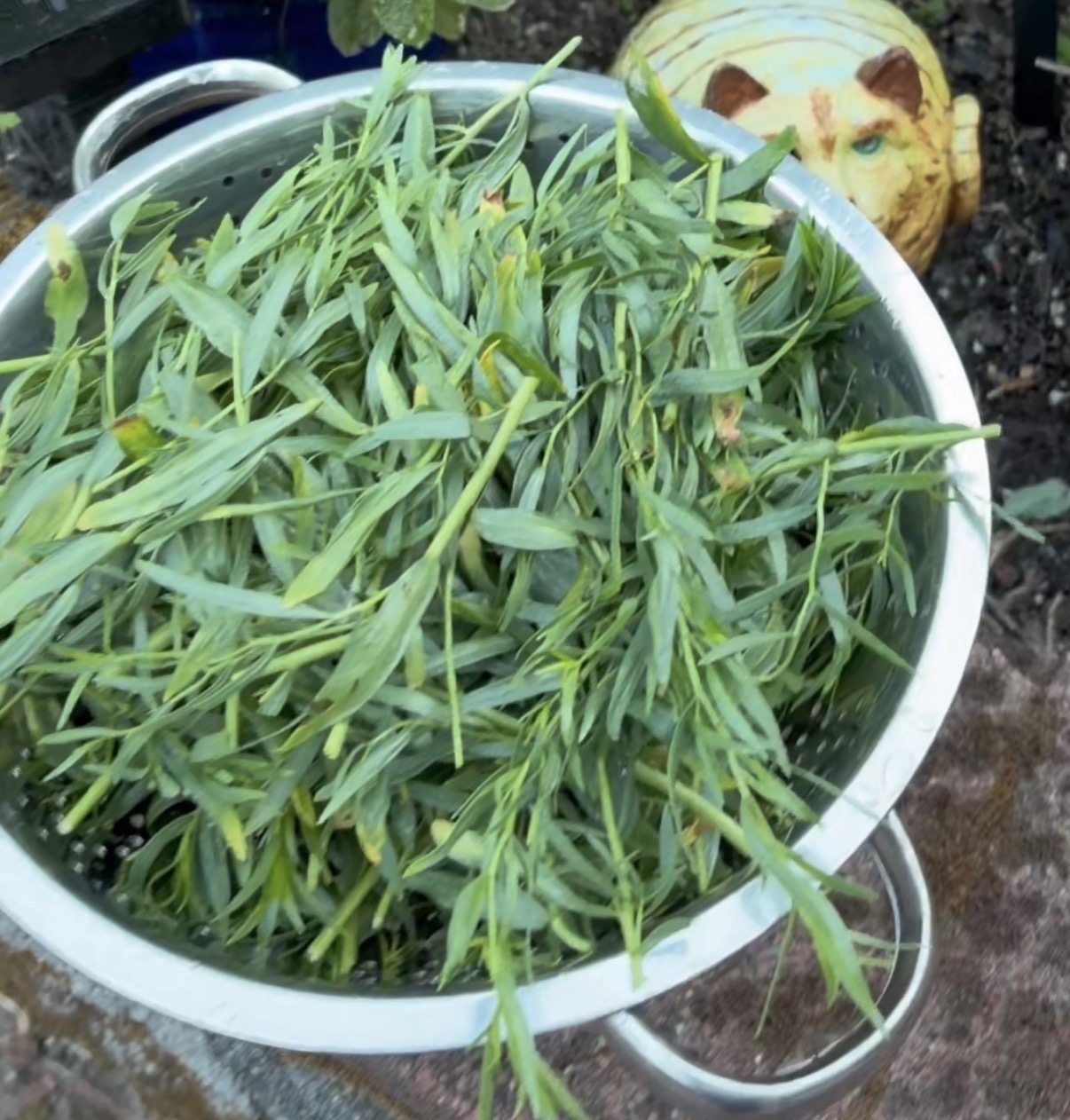
According to some people in my more rural Oregon born and raised family (I love you family, please don’t hate me for spilling truth tea), tarragon is a bougie herb. It’s usually on fancy menus and in French cuisine and it seems out of reach for them – both in acquiring it and using it. If I am being honest, there are a lot of people who likely feel this way – but only because they haven’t grown it and cooked with it themselves.
Tarragon’s flavor is a little delicate, subtle, unfussy, but interesting. It adds a savory, almost minty back note and its scent is that of a very mild black licorice. Sauteed with butter and paired with a more delicately flavored or blank-slate protein like chicken, cod or tilapia, and you have a very nice meal that requires very little fuss. Not bougie at all. Very approachable and makes any food taste upscale for very little expense. It also makes a lovely tea for a tummy ache when mixed with mint and lemon, but more about that another time.
Note! This post contains affiliate links
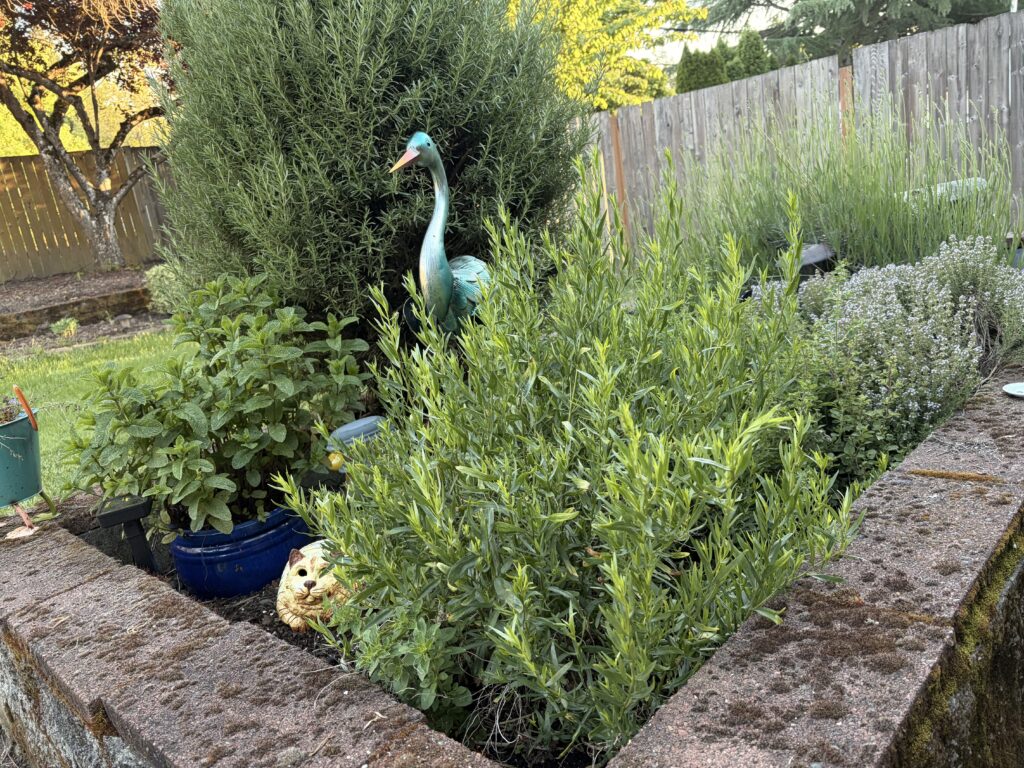
The herb itself is insanely easy to grow. My plant dies back every year and comes back with the enthusiasm of a college kid on their second day of a music-festival. Hair a little messy, clothes looking a little ratty around the edges but ready to have the best time of their life. And I ignore it. It gets enough water to be happy (the fronds will get crispy if left to bake in a hot spot with little water) and the occasional fertilizer, but it just hangs out, excited to be there, growing like it has to take over the world.
This past week my tarragon was getting a little out of control and a little ratty with early spring growth, so it was time to prune her back for a healthier plant. Time to harvest some herbs!
This part is easy. If drying your herbs, you need:
- A colandar
- An excellent pair of clean pruning scissors
- the patience of a saint (because it takes a minute)
- a little controlled rage that needs to be spilled (for the cutting)
- a place to wash your herbs
- paper towels or a cheese cloth/linin cloth you can dry herbs with
- a food dehydrator or an oven with a food drying setting
The harvesting:
Tarragon gets really “woody” near the base where the older part of the plant is. That should be left alone. If you cut too much into this area, your plant will struggle to regrow.
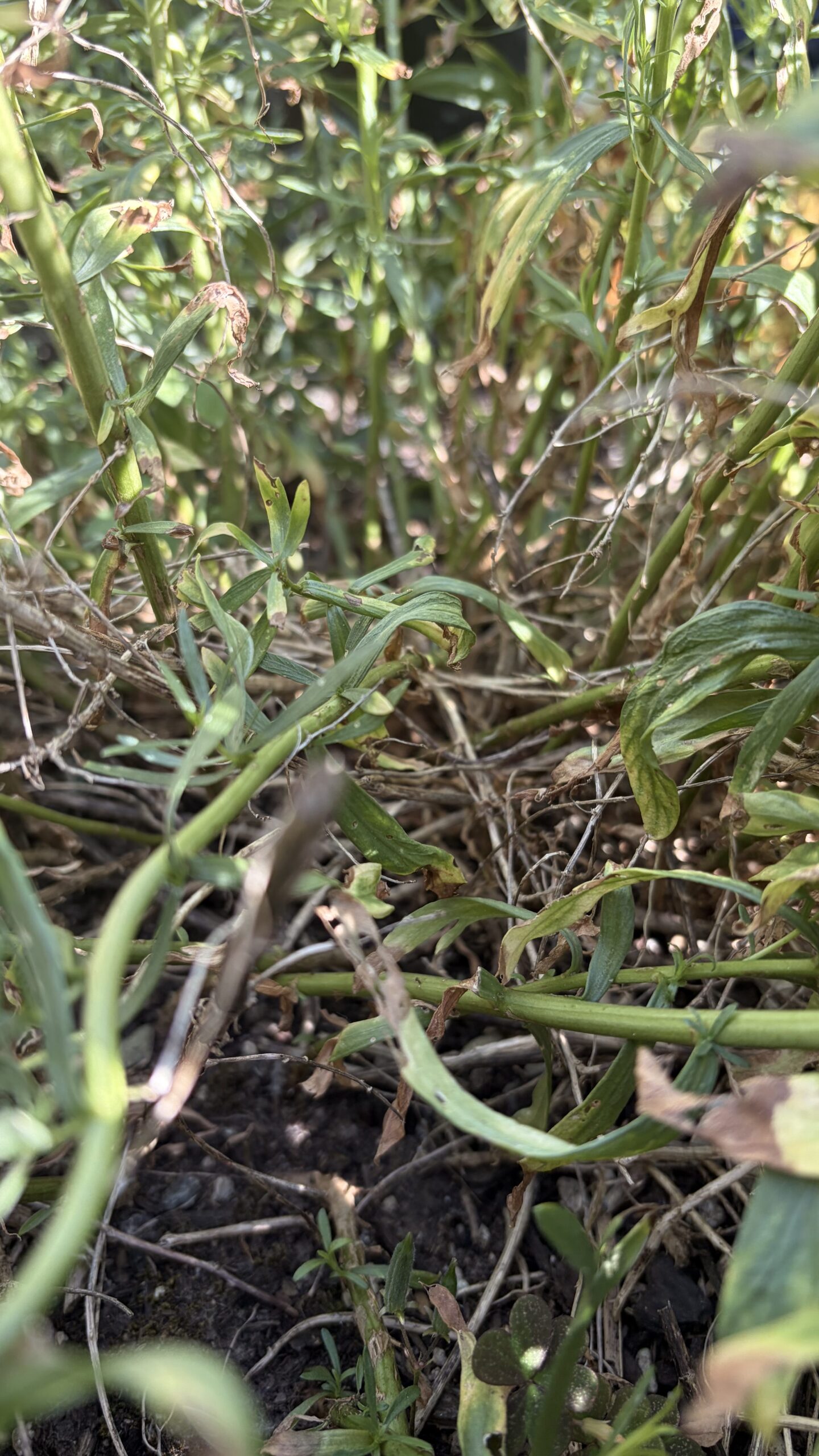
Cut into the “nodes” or just above a little bunch of leaves have formed. You’ll notice that the little fronds of the herb will cluster their growth. Cut just above, about half-way up the stem – to encourage more growth. In the second image below, about where my finger is would be a good place to make a cut on the plant. You can also see the leave clusters as they shoot out from the stem. After cutting just above it, more clusters will appear and create new little stems above them and make your plant bushier with the new growth.
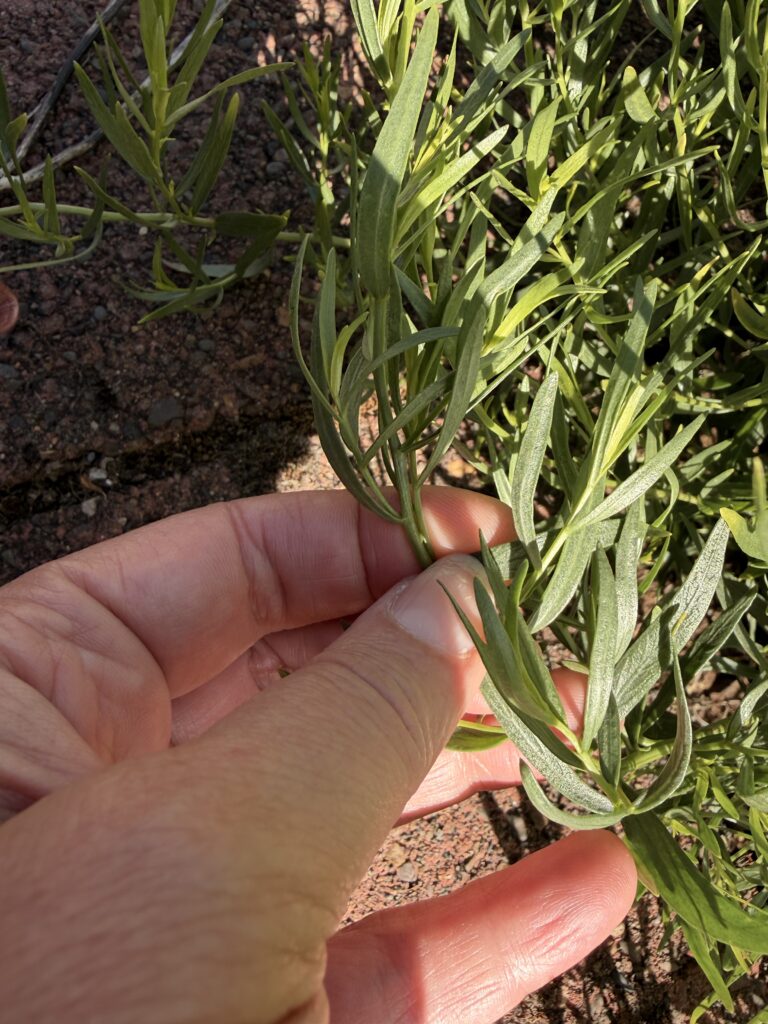
Get yourself a colander. You’ll be washing your herbs after you collect them so this eliminates moving to a different vessel when you get to your wash station.
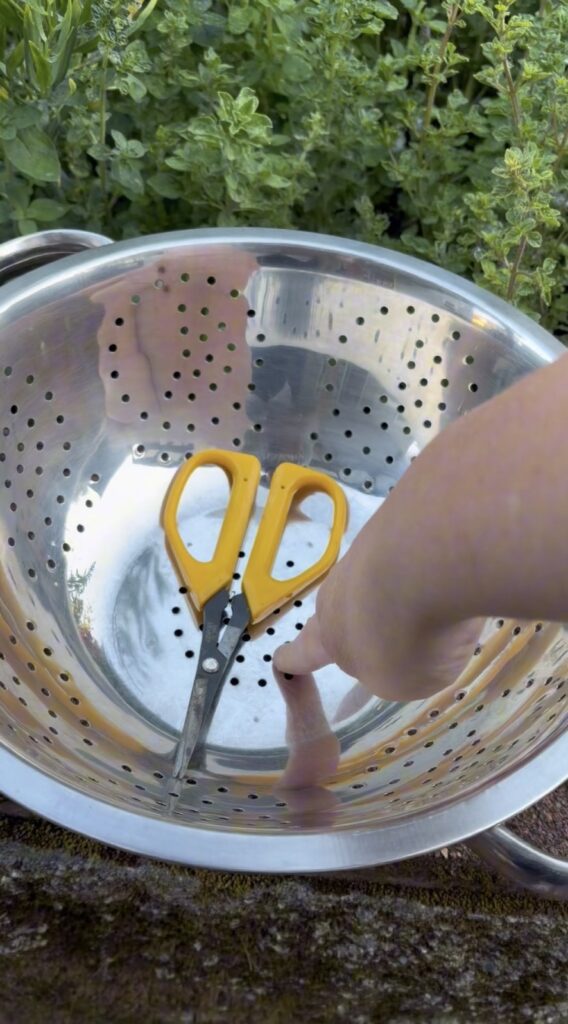
I recommend cutting the pieces small so that they can fit into whatever air dryer/dehydrator you have. Mine is an old school Nesco Food Dehydrator, so my pieces need to be kind of small. This also ensures they fit into my salad spinner to help drying time after washing.
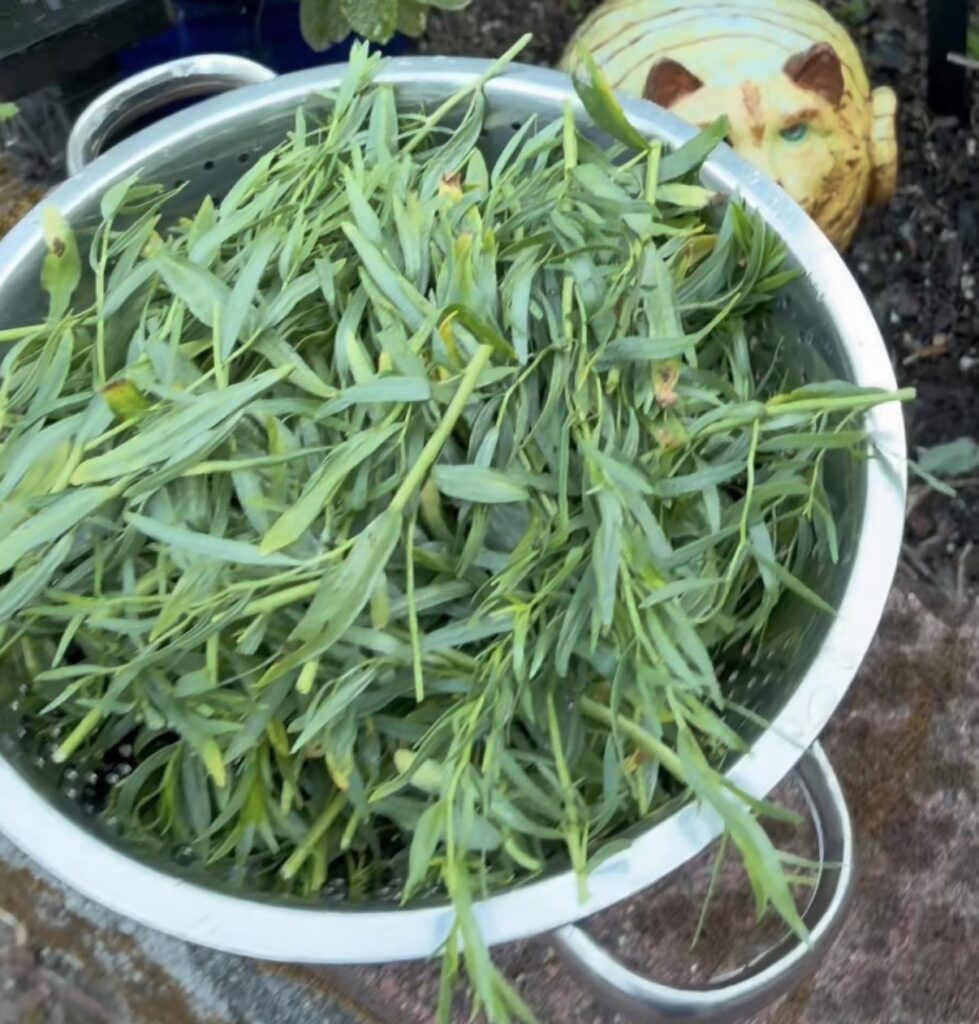
From here, wash them, lay them out to dry on a paper towel or cheese cloth and pat them dry. Transfer to a food dehydrator of choice. Lay them in a single layer and try not to mound or crowd them so they can evenly dry.
But Renae, why aren’t we stripping the leaves first?
Great question!
- Stripping the leaves off of tarragon takes a really long time when they are fresh and plentiful. Their natural oils and plant matter can make them sticky and less happy to be removed from the plant stem. Stripping tarragon after drying is a snap.
- Most importantly – Drying the leaves on the stem yields a MUCH stronger flavor in the dried product. This is the key reason. Don’t go through all the trouble for lightly flavored herbs. You can get that from a grocery store jar.
Tarragon has a delicate flavor and it becomes very muted after drying if not done properly. If you leave the frond on the stem, the flavor and aroma will be largely intact. It does take about 48-72 hours to dry a batch fully in my dehydrator at 95 degrees, so know that you’ll be waiting a while. Leave the dehydrator somewhere it won’t annoy you. The oven with a drying setting may go much faster.
When dry, strip them and contain them in whatever way is best for you. I usually use an herb stripper, but sometimes I use my hands. Be careful, though! Dried tarragon can give you splinters and are a pain to remove. Strip downward, opposite the way the leaves are facing, and they will pop right off.
Storage: I have so much that I need a large freezer bag or silicone bag that I trust to stay sealed. A glass jar would also work. Note that the leaves will be much bigger than the grocery store herbs. Those poor things have been manhandled and crumbled for easy processing. You have beautiful, hand-harvested herbs. Depending on how you store them, you can keep them indefinitely, but the flavor will fade around 6-8 months as long as they are fully and appropriately dehydrated. If you put them in a vacuum sealed jar, it could be much longer.
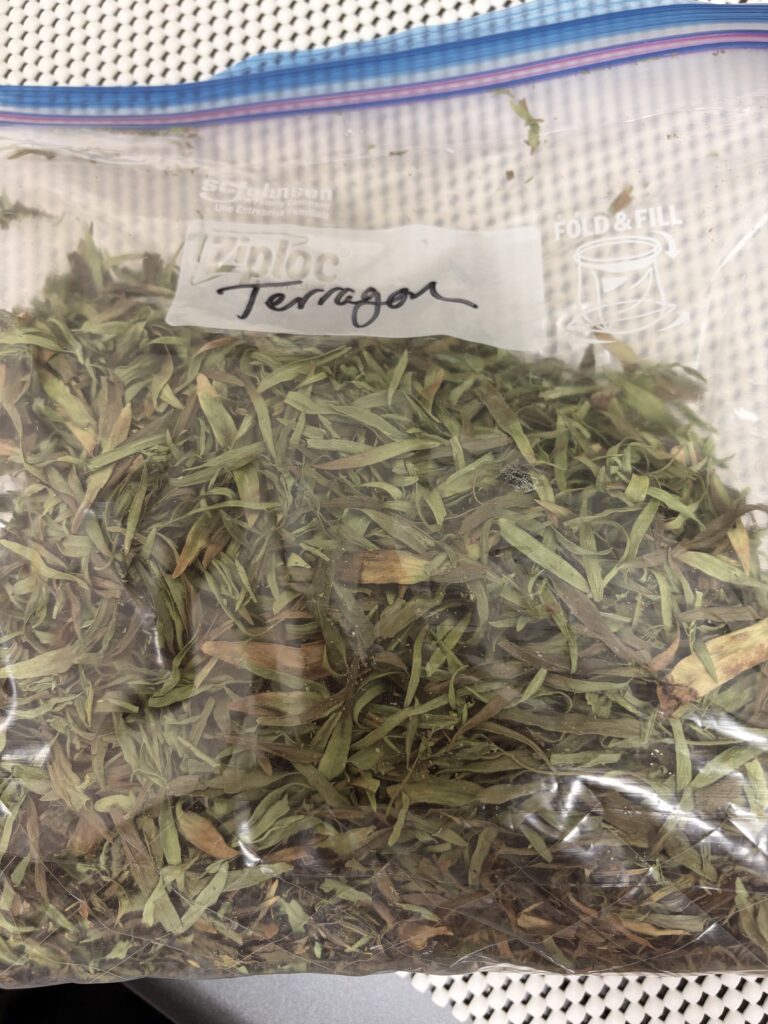
There you have it! Tarragon – the most unfussy “bougie” herb you can grow in your herb arsenal. Once you start cooking with it you’ll realize what you’ve been missing!
Happy Harvesting,
Renae
Disclaimer: The information provided on this blog is for general informational and educational purposes only. While we make every effort to ensure the accuracy and reliability of the content, we make no representations or warranties of any kind, express or implied, about its completeness, accuracy, suitability, or availability. The views and opinions expressed are those of the author(s) and do not necessarily reflect the official policy or position of any organization, employer, or entity. This blog may contain affiliate links or sponsored content, meaning we may earn a commission if you click through and make a purchase, at no additional cost to you. We only recommend products or services we genuinely believe in, but readers should always conduct their own research before making decisions. By using this blog, you acknowledge and agree that you do so at your own risk, and we are not liable for any loss or damage arising from its use.